






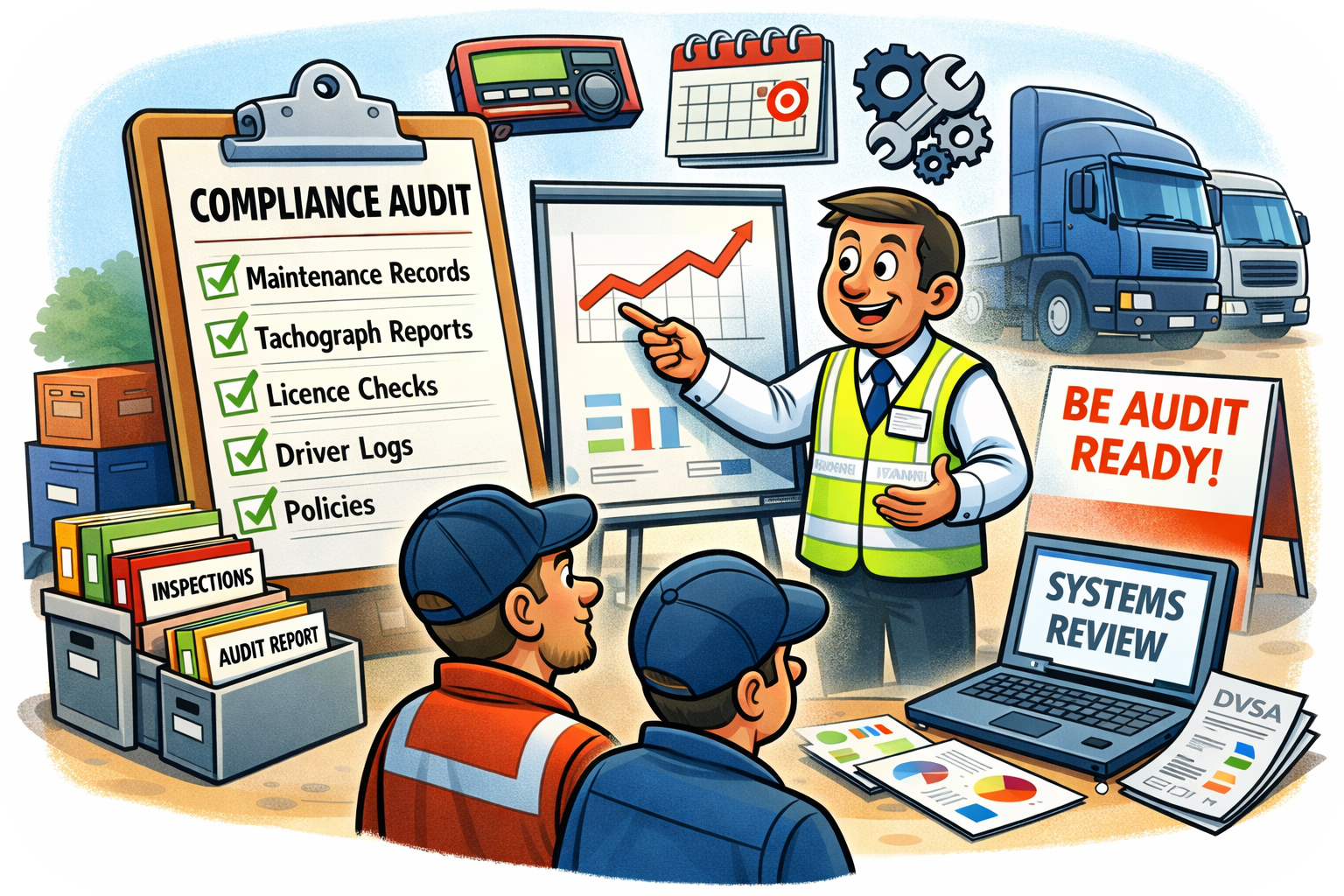
For many operators, the term compliance audit immediately raises concerns. Whether it’s a scheduled transport audit or one triggered by an issue, the key question is always the same — are we ready?
The reality is that audits are a normal part of running a compliant transport operation. The operators who manage them best are those who treat compliance and audits as an ongoing process, not a one-off event.
What Is a Transport Compliance Audit?
A transport compliance audit is a detailed review of your systems, records, and day-to-day operation to ensure you are meeting your operator licence obligations.
Audits may be conducted by:
- Internal compliance teams
- External consultants
- The Driver and Vehicle Standards Agency
- As part of regulatory action or Public Inquiry preparation
The purpose is to assess whether your operation is under effective and continuous control.
What Auditors Expect to See
A common misunderstanding is that a compliance audit is simply a document check. In reality, it is about evidence of management control.
Auditors will typically assess:
- Maintenance systems, PMI records, and brake testing
- Driver defect reporting and rectification
- Tachograph analysis, infringements, and follow-up action
- Driver licence checks and training records
- Policies, procedures, and implementation
- Evidence of management involvement and oversight
It is not enough to have systems in place — you must be able to demonstrate that they are actively managed.
Where Operators Commonly Fall Short
In many cases, the issue is not that systems don’t exist — it’s that they are not evidenced properly.
Common gaps include:
- Missing or incomplete maintenance records
- No documented follow-up on drivers’ hours infringements
- Inconsistent defect reporting
- Policies that are not reviewed or signed
- Lack of clear responsibility within the business
From an audit perspective, no evidence often means no system.
How to Prepare for a Compliance Audit
Preparation should not start when the audit is booked. It should already be part of your operation.
To remain audit-ready:
- Maintain at least 15 months of maintenance records
- Ensure tachograph analysis is reviewed and acted upon
- Keep clear records of driver checks, training, and communication
- Store documents in a structured, accessible system
- Regularly review compliance performance
A simple test: could you provide key documents within minutes if requested?
The Importance of Ongoing Monitoring
The strongest operators are those who monitor their compliance continuously.
This includes:
- Reviewing KPIs and trends
- Identifying issues early
- Taking corrective action and recording it
- Carrying out internal or external audits
A transport audit should confirm your systems are working — not highlight them for the first time.
Why Compliance Audits Matter
Regular compliance and audits provide more than just reassurance. They:
- Highlight risks before they escalate
- Strengthen operational control
- Improve safety and performance
- Support your position if challenged by regulators
- Reduce the likelihood of enforcement action
Operators who embrace audits tend to have fewer surprises.
Staying in Control of Your Compliance
A compliance audit is ultimately about one thing — demonstrating that your business is being properly managed.
If your systems are structured, documented, and regularly reviewed, an audit becomes a routine process rather than a concern.
Support With Transport Compliance Audits
If you are preparing for a transport compliance audit, or want to understand how your operation currently stands, structured support can make a significant difference.
LDP Transport Consultancy provides:
- Independent compliance audits
- Gap analysis and corrective action plans
- Ongoing compliance management support
- Audit preparation and evidence review
If you want confidence in your compliance systems, get in touch today.
