






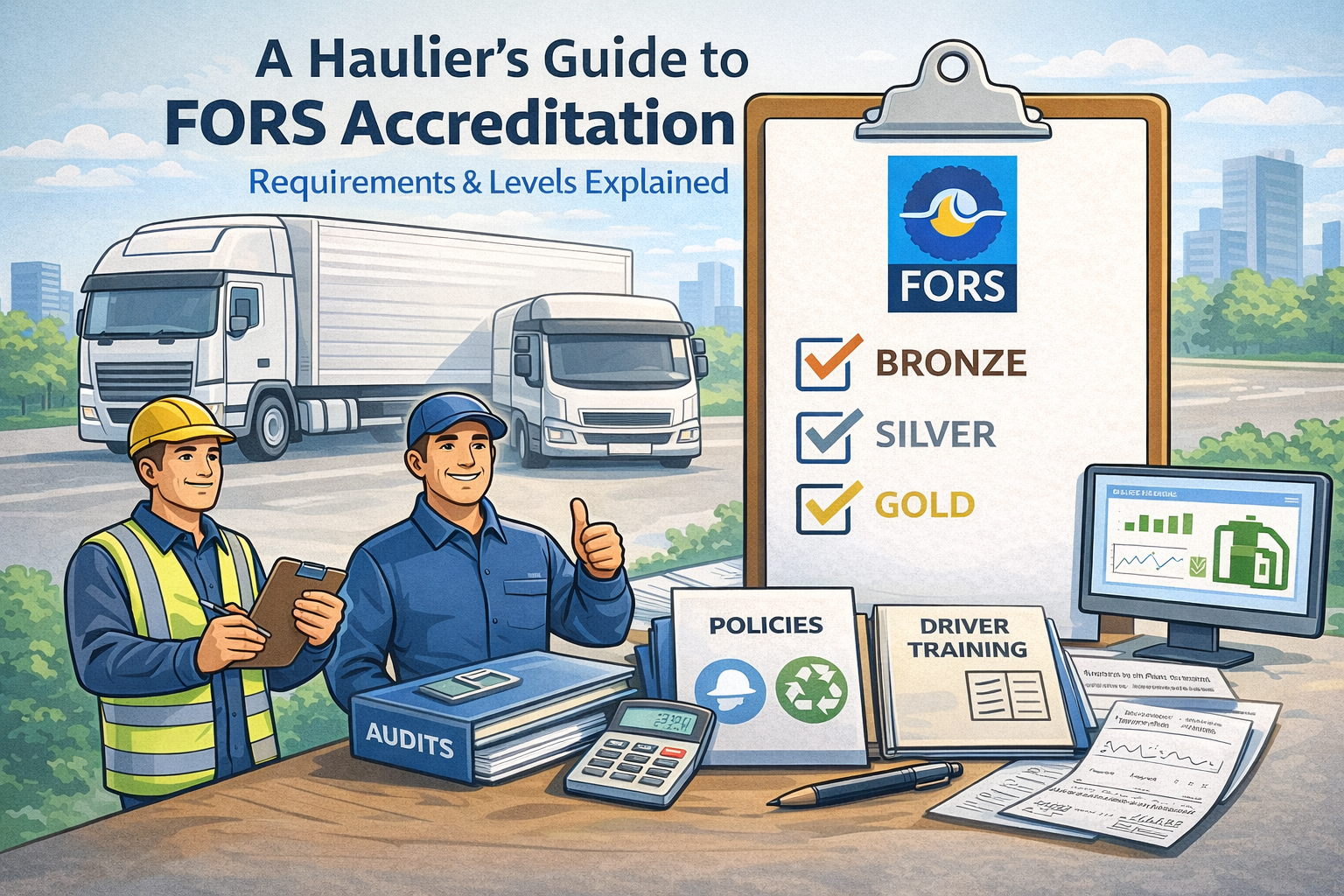
For many fleet operators, FORS accreditation is no longer optional - it is a requirement to win and retain contracts. Yet many businesses underestimate what is involved in meeting the full FORS compliance requirements, particularly when progressing beyond Bronze level.
Understanding how the scheme works and preparing properly for a FORS audit makes the process far more straightforward.
What Is FORS and Why Does It Matter?
The Fleet Operator Recognition Scheme (FORS) is a nationally recognised standard designed to improve safety, environmental performance, and operational compliance within the transport industry.
Contractors and principal clients often require at least FORS Bronze, and increasingly FORS Silver or Gold, before awarding work.
FORS is not simply a badge — it is a structured compliance framework that requires evidence, monitoring, and ongoing improvement.
Understanding FORS Bronze, Silver and Gold
FORS Bronze – Legal Compliance Foundation
FORS Bronze focuses on proving your operation meets core legal standards.
This includes:
- Valid operator licence and correct authorisations
- Planned maintenance systems
- Drivers’ hours monitoring
- Insurance and documentation control
- Basic safety and environmental policies
Bronze is about demonstrating control and compliance.
FORS Silver – Performance Monitoring
FORS Silver moves beyond compliance and focuses on performance and road safety improvements.
Additional expectations include:
- Monitoring fuel usage and emissions
- Collision reporting and analysis
- Vulnerable road user training
- Performance data review
- Evidence of continuous improvement
Silver requires structured monitoring systems, not just policies.
FORS Gold – Demonstrating Leadership
FORS Gold is the highest level and focuses on measurable outcomes and industry leadership.
To achieve Gold, operators must show:
- Ongoing environmental improvements
- Demonstrable safety culture
- Performance benchmarking
- Public reporting
- Staff engagement and development
Gold accreditation shows that compliance is embedded within the business.
Preparing for a FORS Audit
One of the most common issues operators face is poor preparation for a FORS audit.
Typical challenges include:
- Outdated policies
- Missing driver training evidence
- Weak tachograph monitoring
- Lack of performance data
- Incomplete document control
A successful FORS audit relies on organised evidence, structured processes, and clear allocation of responsibilities.
Operators who treat FORS as a paperwork exercise often struggle. Those who treat it as a management system tend to pass with confidence.
The Business Benefits of FORS Accreditation
Beyond contract access, the benefits of FORS accreditation include:
- Improved compliance structure
- Reduced incident risk
- Better fuel efficiency tracking
- Stronger maintenance control
- Enhanced reputation with clients
For many operators, the real benefit is the discipline FORS introduces into daily operations.
Is Your Operation Ready?
Before applying or upgrading your FORS level, it is worth asking:
- Are your maintenance systems audit-ready?
- Is drivers’ hours monitoring consistent and evidenced?
- Can you demonstrate performance improvements?
- Are policies actively implemented, not just filed away?
Answering these honestly can prevent delays and failed audits.
Professional Support for FORS Accreditation
If you are applying for FORS accreditation, preparing for a FORS audit, or upgrading from Bronze to Silver or Gold, structured guidance can significantly reduce stress and risk.
LDP Transport Consultancy provides:
- FORS Bronze, Silver and Gold preparation
- Internal compliance reviews
- Policy development
- Performance monitoring systems
- Audit readiness support
If you want to approach FORS correctly and achieve accreditation with confidence, get in touch today.
